For decades, the narrative around robotics has focused on a single destination: full autonomy. Self-driving vehicles, fully automated warehouses, and lights-out factories dominate headlines and investor decks. But in the real world—where reliability, regulation, and economics matter—there is a powerful and often overlooked step that comes first:
Remote control of mechanical devices by skilled human operators.
This model is not a compromise. It is a strategic advantage.
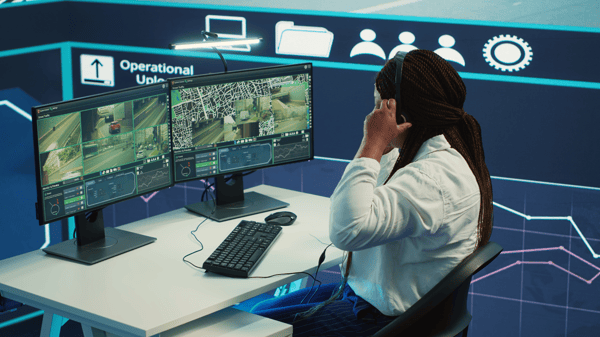
Remote operator monitoring agriculture machinery
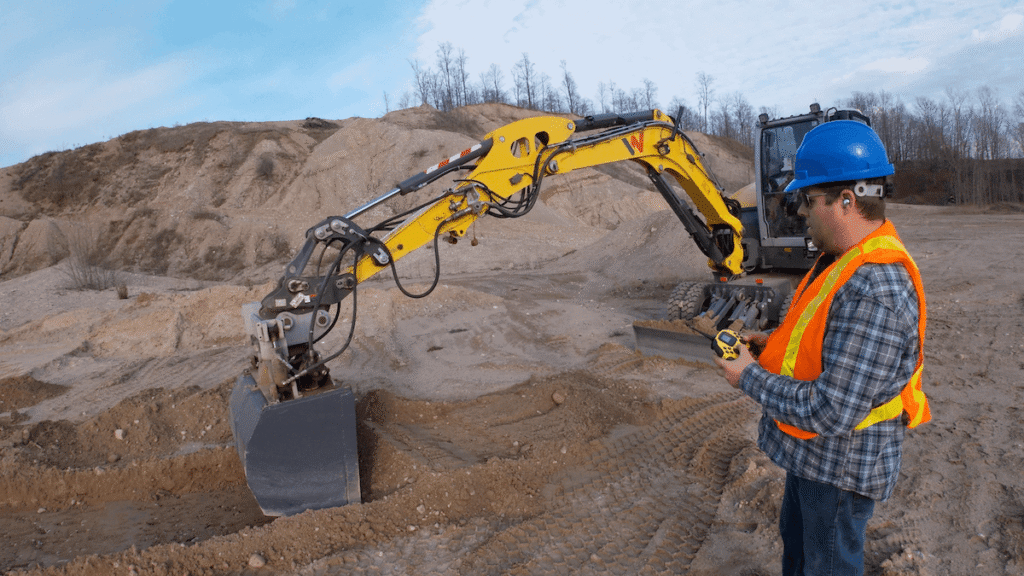
Heavy machinery operator remotely controlling a back hoe
Full automation is hard. It requires perfect perception, decision-making, and edge-case handling in environments that are anything but predictable. Stores, construction sites, farms, factories, and public spaces constantly change. Humans, however, are exceptional at adapting.
Remote operation allows companies to:
- Deploy robotic systems today
- Operate safely in real-world environments
- Capture data and operational learning
- Deliver immediate economic value
all while laying the groundwork for increasing levels of automation over time.
Rather than waiting years for autonomy to mature, remote control lets businesses move now.
Remote operation is not theoretical. It is already proven across multiple industries:
Logistics & Fulfillment
Robots remotely operated to pick items, move carts, and handle goods inside warehouses or retail stores—especially in environments where full autonomy struggles with variability.
Construction & Mining
Heavy equipment such as excavators, loaders, and drilling rigs operated remotely to keep humans out of hazardous zones while maintaining expert control.
Agriculture
Remote-controlled harvesters, sprayers, and inspection vehicles operated by skilled technicians far from the field.
Healthcare & Mobility
Remote operation of assistive devices, wheelchairs, or transport platforms in controlled environments like airports or campuses.
Manufacturing & Maintenance
Robotic arms and mobile platforms performing inspection, handling, or rework tasks under human supervision.
In each case, the machine does the physical work; the human provides judgment.
Unlocking the Global Workforce
One of the most transformative aspects of remote operation is labor geography.
Skilled operators no longer need to be physically present where the work is performed. This unlocks:
- Access to a global talent pool
- Labor cost efficiency without compromising quality
- 24/7 operations across time zones
- New economic opportunities in regions with skilled but underutilized labor
A trained operator in one country can control a machine thousands of miles away with precision, consistency, and accountability.
This is not outsourcing—it is digitizing physical labor.
Why Remote Operation Scales Faster Than Automation
From a business perspective, remote control offers several structural advantages:
- Faster deployment: No need to solve every edge case upfront
- Lower technical risk: Humans handle exceptions while systems mature
- Regulatory simplicity: Easier to approve than fully autonomous systems
- Immediate ROI: Machines can generate value on day one
- Automation-ready: Data collected during remote operation feeds future autonomy
Remote operation doesn’t slow automation—it accelerates it by grounding it in real-world usage.
A New Model for Physical Work
At its core, remote operation represents a shift in how physical work is delivered:
- From local labor to global capability
- From fixed staffing to elastic capacity
- From manual processes to software-defined systems
Machines become endpoints. Humans become distributed operators. Software becomes the connective tissue.
This is how physical work enters the digital economy.
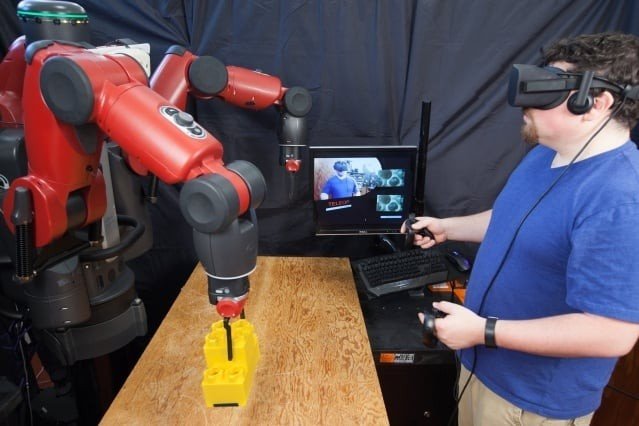
Robotic technician controlling robot arm for pick and place
Looking Ahead
Full automation will arrive—but not all at once, and not everywhere. The companies that win will be those that build practical systems that work today, while continuously increasing automation tomorrow.
Remote-controlled mechanical devices are not a stopgap.
They are the foundation.